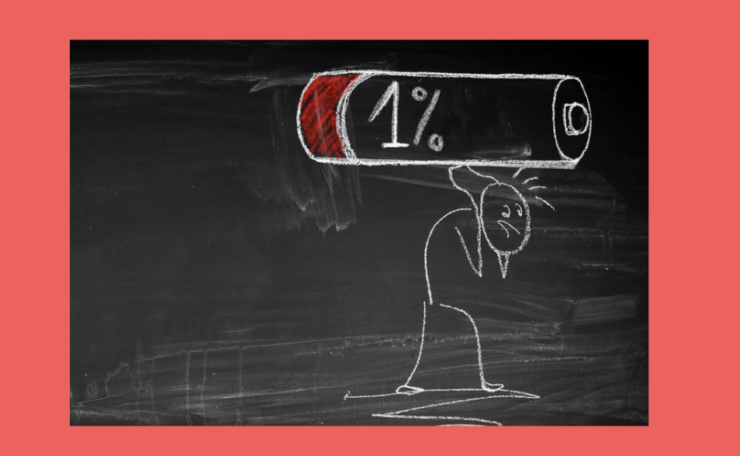
There’s a sentence I hear often in the clinic, and it’s usually said quietly.
“I don’t feel like myself anymore.”
Not seriously unwell, still functioning, still doing what needs to be done. But something feels different. You’re more easily overwhelmed than you used to be. More reactive to situations. You feel more sensitive to pressure.
To add to this, your focus isn’t quite as sharp. Your patience feels thinner. You recover from stress more slowly.
From the outside, everything may look fine.
But internally, it feels harder.
This is often labelled as burnout. Or ageing. Or perimenopause.
And sometimes those labels are helpful.
But underneath them is something more specific: stress physiology and hormone regulation under sustained strain.
Burnout Is Not Just Emotional
Burnout is often framed as something psychological, as though it’s purely about workload or mindset.
But as Bessel Van Der Kolk said, the body keeps score.
When stress is prolonged, our cortisol rhythm can shift. Sleep can become lighter, and then recovery becomes less efficient. The nervous system remains slightly more on alert than it should.
Over time, that subtle dysregulation affects how you feel and how you react.
You may not notice it at first, then over time, you realise you don’t quite feel the same as you once did.
What Dysregulated Cortisol Does to the Brain
Cortisol is not just a stress hormone. It interacts directly with areas of the brain involved in focus, decision-making, emotional regulation and threat perception. When cortisol rhythm becomes erratic, too high at the wrong times, too flat at others, cognition can change.
You might notice:
- Slower processing
- Reduced working memory
- Increased sensitivity to criticism
- Extreme emotional reactions to small stressors
- Difficulty switching between tasks
- Feeling mentally cluttered
Many high-functioning women describe it as feeling cognitively noisy, saying “I used to cope with everything. Now small things feel big.”
This is a nervous system that has been struggling for too long.
Hormonal Changes Add Another Layer
If this is happening during perimenopause, the picture becomes more layered. Progesterone, which supports sleep and has a calming effect on the brain through GABA pathways, often becomes less predictable before estrogen declines significantly. If stress is already high, and cortisol is repeatedly prioritised, progesterone’s steadying influence is reduced.
This leads to:
- More anxiety
- Less emotional buffering
- Lighter sleep
- Feeling on edge
Estrogen also plays a role in mood, motivation and cognitive flexibility. Shifts in estrogen metabolism can influence mental clarity and verbal fluency in subtle but noticeable ways. This is why burnout in midlife can feel different.
Why Rest Alone Doesn’t Always Resolve It
Often, women instinctively do the right things. They try to rest more and invest in self-care. They try to improve sleep and maybe add supplements. Sometimes that helps. But if cortisol rhythm and hormone metabolism remain dysregulated, symptoms can persist. You may feel slightly better, but not fully yourself. That’s because regulation hasn’t been properly assessed.
When Structured Investigation Becomes Useful
If you feel emotionally thinner, less cognitively sharp, more easily overwhelmed or simply different in a way you can’t quite articulate, it may be worth looking more closely at stress physiology and hormone patterns.
TheDUTCH (Dried Urine Test for Comprehensive Hormones) profile allows us to assess daily cortisol rhythm, metabolised cortisol levels, progesterone balance, estrogen metabolism pathways and DHEA levels. This provides a structured view of how stress and hormones are interacting and how that interaction may be influencing mood, focus and resilience.
It shifts the conversation from just coping better to understanding what’s happening biologically and then taking steps to help you move forward.
You’re Not Losing Yourself
When capable, high-functioning women feel cognitively or emotionally different, they often assume something is wrong with them. In many cases, the nervous system is simply under sustained regulatory pressure. Burnout and hormone shifts affect how steady you feel, how clearly you think and how quickly you recover.
If this resonates, feel free to take a look at the DUTCH Complete. When the results come back, I can work with you to help you understand them and find a way forward.

DUTCH Complete
This test costs £264 & UK shipping £9.
DUTCH Complete Hormone Test
Please Note; this test is processed through our partner laboratories. Once you submit your details via our shopping cart, you’ll receive a secure payment link directly from them to cover the cost of the test and postage. You will hear from them within 48 hours.
For shipping outside the UK, please contact us for a quote.