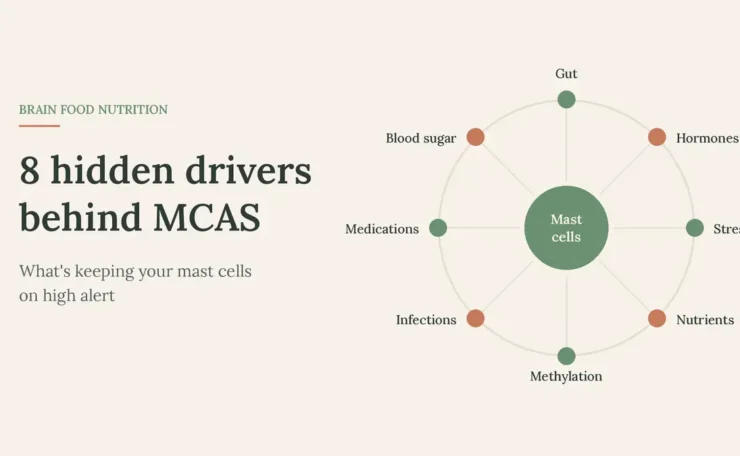
If you’ve lived with MCAS or histamine intolerance for a while, you probably know your low-histamine food lists inside out. You may have tried antihistamines, quercetin or a mast cell stabiliser. Some things helped a bit. But you’re still reacting, and your list of safe foods keeps shrinking.
That usually means the triggers are being managed, but the reasons your mast cells are so reactive in the first place haven’t been found. This post goes into those reasons in more depth. Many of these drivers are especially relevant if you’re hypermobile or have POTS, and the same goes if you’re autistic or have ADHD.
What’s driving your mast cells?
Mast cells don’t become overactive for no reason. In functional medicine, the question is always what’s keeping them on high alert. For most people there are several smaller loads stacking up until the system tips over. These are the drivers I look for most often.
1. The gut
This is usually where I start. A large share of your mast cells live in the gut lining, so what happens there has a big effect on the whole body.
- Dysbiosis and histamine-producing bacteria. Certain gut bacteria make histamine from the food you eat. If these overgrow, your gut is effectively producing its own supply, on top of what’s on your plate.
- SIBO. Bacterial overgrowth in the small intestine causes fermentation, bloating and inflammation, and it’s very common in people with histamine problems. It’s also more common in people with hypermobility, partly because of slower gut movement.
- A damaged gut lining. DAO is made by the cells lining your small intestine. When that lining is inflamed or damaged, from infection, coeliac disease, food sensitivities, alcohol or long-term stress, DAO production drops. A leaky, irritated gut lining also exposes the immune system to more triggers, which keeps mast cells reactive.
- Yeast overgrowth and parasites. Candida and parasites can both irritate the gut and activate the immune system.
- Low stomach acid. Stomach acid helps break down protein and keep bacteria in check further down the gut. When it’s low, whether from stress, ageing or long-term acid-suppressing medication, you’re more prone to overgrowth and poor digestion.
2. Hormones, especially oestrogen
Hormones play a major part for women. Mast cells have oestrogen receptors, and oestrogen makes them more likely to release histamine. Histamine, in turn, can stimulate the ovaries to produce more oestrogen. It becomes a loop.
Progesterone has the opposite effect. It helps to calm mast cells and supports DAO. So when oestrogen is high relative to progesterone, symptoms tend to get worse.
That’s why many women notice their reactions flare before a period, around ovulation or when they hit perimenopause and progesterone starts to drop. It’s also why some women feel unusually well in pregnancy, when the placenta produces large amounts of DAO. How well you clear oestrogen through the liver and gut matters too. If clearance is sluggish, oestrogen hangs around for longer.
3. Stress and the nervous system
Mast cells respond directly to stress hormones. One of the first signals in the stress response, corticotropin-releasing hormone, triggers mast cells to release their contents. That’s why a stressful week can make you react to foods you normally tolerate.
Long-term stress also wears down the gut lining, disrupts sleep and changes cortisol rhythms, which adds to the load. For neurodivergent people, chronic stress often comes from masking, sensory overload and burnout rather than obvious life events. The body responds to it in the same way. Dysautonomia and POTS, which are common in hypermobile people, make things harder still, because the nervous system is already struggling to regulate.
4. Nutrient gaps
The pathways that clear histamine and calm mast cells depend on nutrients:
- Vitamin B6 is needed for DAO to work.
- Copper is part of the DAO enzyme itself.
- Zinc helps to stabilise mast cells.
- Vitamin C helps to break down histamine and lowers histamine levels in the blood.
- Vitamin D helps to regulate mast cell activity, and low levels are very common in the UK, especially in winter.
- Magnesium is often low in people who are stressed, and low magnesium has been linked with greater mast cell reactivity.
- Omega-3 fats help to calm inflammation more broadly.
Restrictive diets, poor absorption from a damaged gut and high stress can all leave you short.
5. Methylation and genetics
Outside the gut, histamine is cleared by a second enzyme called HNMT. HNMT relies on methylation, the same process affected by variants in genes such as MTHFR. If methylation is under strain, histamine clearance can slow down.
Some people also carry genetic variants that reduce how much DAO or HNMT they make. Having a variant doesn’t mean you’ll have problems, but knowing about it helps explain why you react more than others and where to focus support.
6. Infections and immune triggers
A past or ongoing infection can switch the immune system into a more reactive state. Many people trace the start of their symptoms back to a particular illness. MCAS-type symptoms are common after COVID, and old viral infections such as glandular fever can reactivate. Ongoing exposure to mould in a damp home is another trigger I ask about, particularly in older UK housing.
7. Medications
Some medications can block DAO or trigger mast cells directly. These include certain painkillers, some antibiotics, acid-suppressing drugs and some antidepressants. This doesn’t mean you should stop anything you’ve been prescribed. If you suspect a link, talk to your prescriber first.
8. Blood sugar swings
Big rises and crashes in blood sugar stress the body and push up inflammation. Irregular eating, which is common when routines collapse in December, can make reactions worse.
Matching drivers to tests
Testing shows which of these drivers apply to you. These are the tests I use most for MCAS and histamine problems:
- Gut: the GI360 Complete stool test looks at gut bacteria (including histamine producers), inflammation, digestion and yeast. A SIBO breath test checks for small intestinal bacterial overgrowth.
- Histamine breakdown: a DAO blood test shows whether your ability to break down histamine from food is low. This one isn’t in my online shop, so if you’d like to order it, get in touch and I’ll arrange it for you.
- Hormones and stress: DUTCH Complete shows your oestrogen and progesterone, how well you clear oestrogen and your daily cortisol rhythm.
- Yeast, bacteria and methylation markers: the organic acids test (OAT).
- Methylation genetics: a methylation DNA report, including MTHFR.
- Mould: a mycotoxin panel, if there’s damp at home or work.
- Nutrients: a vitamin D test, the Omega-3 Index and hair mineral analysis for zinc, copper and magnesium patterns.
You don’t need all of these. Part of my job is working out which one or two will tell us the most, so you’re not paying for tests you don’t need. If you’re not sure where to start, a consultation is the best first step.
Working out your drivers
Most people I see have three or four of these going on at once. A gut imbalance, a hormonal pattern that tips towards oestrogen, a nervous system that never fully switches off and a few nutrient gaps is a very common picture. Each one on its own might be manageable. Together, they keep your mast cells firing.
Each driver you address lowers the overall load. That’s often when people find they can bring foods back in, rather than cutting more out.
If you’d like to find out what’s driving your symptoms, I work with people with MCAS, histamine intolerance, hypermobility and neurodivergence, using functional testing and a full health history to build a plan around you.