A common early motor symptom in autism is toe walking. Parents are usually told it is linked with sensory processing and/or a tight Achilles tendon. What doesn’t get considered is the role of the gut and a specific bacterial subset within it.
In research on autism and the gut microbiome, there is a lot of focus on a specific group of gut bacteria: Clostridia, everyone has some Clostridia, but how much of the gut these bacteria are allowed to colonise dictates the impact they have on wider health and development. Certain Clostridia species produce a compound called HPHPA, along with another called 4-cresol. These metabolites block an enzyme, dopamine beta-hydroxylase, that converts dopamine into norepinephrine. When this is blocked or compromised dopamine builds up. These elevated dopamine levels and general depleted brain catecholamines are linked to issues like hyperactivity and heightened reactivity. In autistic children specifically, gut Clostridia overgrowth has been associated with aggression, agitation, OCD-type behaviour and irritability. The clinical picture that seems to be the most associated with elevated Clostridia toxins is erratic, aggressive and self-injurious behaviour.
When dopamine levels are higher and conversion to norepinephrine is blocked we will often see signs of low norepinephrine. This presents as low mood, poor focus and motivation and anhedonia. You might get a mixture of high dopamine/low norepinephrine symptoms.
Dopamine is central to motor control, we see in Parkinson’s disease that dopmine dysregulation causes rigidity and abnormal movement and with this a fair clinical question would be whether excess dopamine, driven by gut bacteria, contributes to the muscle tension and toe walking we see in autism. This specific link hasn’t been studied directly, but we have looked at the wider picture of elevated Clostridia metabolites in autism and the mood and behavioural fallout of the dopamine-norepinephrine imbalance.
his isn’t just something to worry about, it’s testable. An Organic Acids Test measures HPHPA directly, along with the HVA/VMA ratio, which shows how well the body is converting dopamine to norepinephrine. A raised ratio points to exactly this imbalance. Where Clostridia toxins are elevated, I usually start by addressing the overgrowth, resolving it can allow the enzyme’s activity, and the mood, behaviour, and motor symptoms tied to it, to settle.
This conversion and the presence of clostridia metabolites can be viewed in an Organic Acids Test (OAT). The OAT measures HPHPA directly, along with the HVA/VMA ratio, which shows how well the body is converting dopamine to norepinephrine. Where Clostridia toxins are elevated, I usually start by addressing the overgrowth as resolving it can improve the enzyme’s activity and then the mood, behaviour and motor symptoms tied to it improve.
Clostridia tends to take up space in the gut when antibiotics are given. During a course of anitbiotics clostridia survive as spores, dormant, armoured versions built to withstand the conditions a course of antibiotics creates. While antibiotics clear out the more vulnerable bacteria that would normally keep Clostridia in check, the spores wait it out. Once the course ends and the competition is gone, they can spread with far less resistance in their way.
Not every antibiotic course carries equal weight, researchers refer to the first 1000 days of life, from conception to around age two, as a critical window for gut microbiome development. It’s the period when a baby’s gut goes from essentially a blank slate to an established, functioning ecosystem. The gut microbiome goes on to shape immune, metabolic and neurological development for the rest of that child’s life. The gut microbiota is far more vulnerable to disruption during this 2-year window than it will be after that time frame. So a course of antibiotics given to a two-day-old, or a two-week-old while the gut’s bacterial population is still being seeded and established the impact is huge and there is very little else in place yet to prevent something like Clostridia taking hold.
I know this cycle first-hand as when my son was 14 days old, I needed to take antibiotics for six weeks. The advice at the time was to keep breastfeeding throughout. We didn’t know just how much of an impact this could have on his development. We were thinking about clearing an infection and keeping him fed. Years later, his Organic Acids Test came back with exceptionally high levels of Clostridia markers. Looking back, I have little doubt that six weeks of antibiotics at fourteen days old, delivered to me but reaching him, played a significant part in disrupting his gut at the point it was meant to be establishing itself.
A young child’s gut microbiome is still developing but as diet diversifies, the range of bacterial species competing for space in the gut tends to expand too. Clostridia overgrowth often takes hold when gut diversity is low, which is more likely in infancy and early toddlerhood, particularly following antibiotic use. As a wider, more balanced population establishes itself over the following months and years, Clostridia can sometimes be crowded out again, and the toxins driving the dopamine imbalance can fall with it. This might explain why some children’s symptoms ease with time. Some children’s guts rebalance naturally, some don’t and diet, further antibiotic courses and overall gut health likely contribute.
Recommended products
-
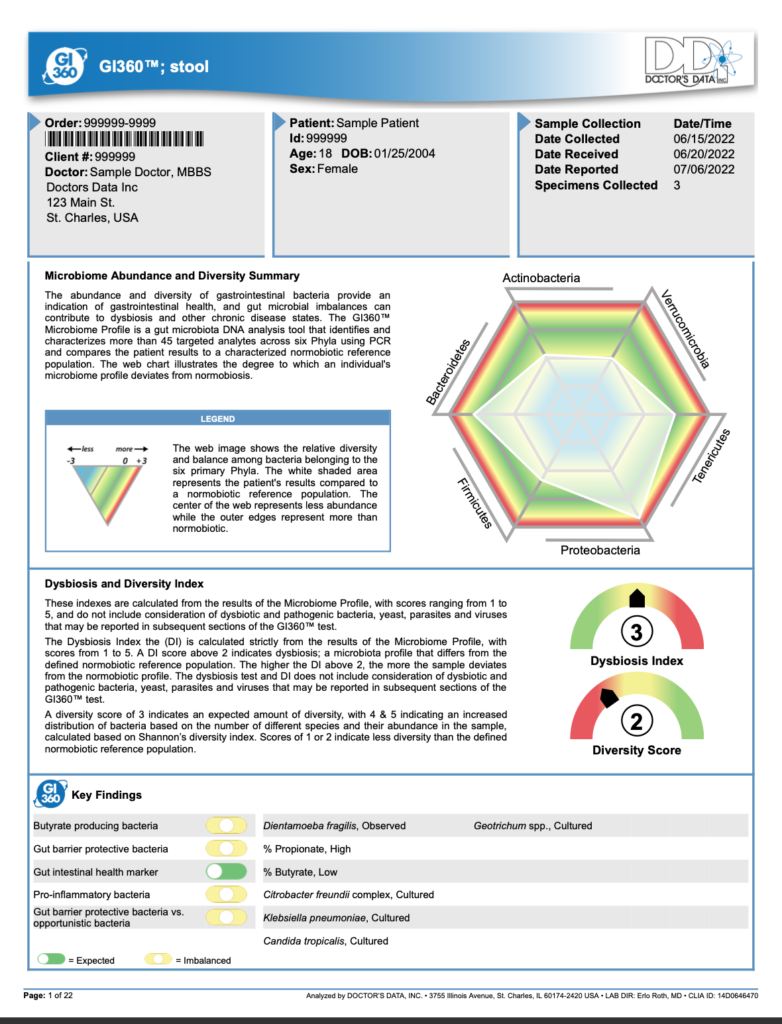
GI360 Complete Stool Test
£0.00 -

Organic Acid Test (OAT)
£0.00 -
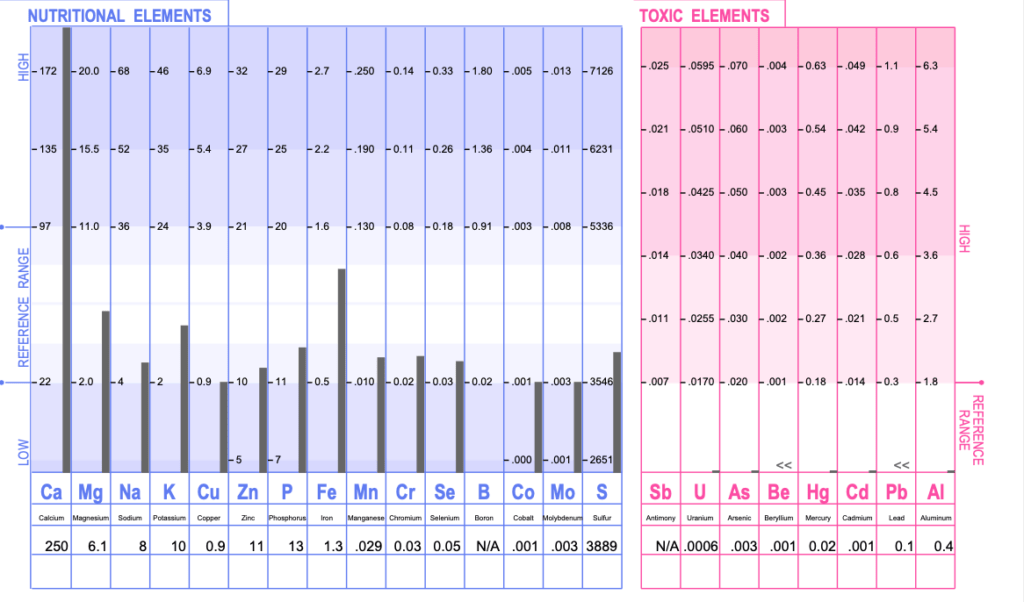
Hair Mineral Analysis
£77.00